
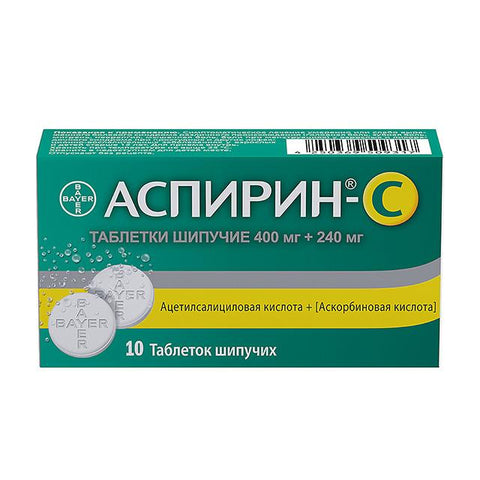
Aspirin-C Effervescent Tablets No. 10
Aspirin-C Effervescent Tablets No. 10
Aspirin-C is an effervescent tablet containing acetylsalicylic acid and vitamin C, intended for the symptomatic treatment of colds, acute respiratory viral infections, and conditions accompanied by elevated temperature, headache, muscle or joint pain. The convenient soluble form allows for the quick preparation of the medicinal drink and makes the medication easier to take.
Aspirin-C Effervescent Tablets No. 10 may be used by adults and adolescents in accordance with the official instructions. The medication helps reduce elevated temperature, alleviate pain, and improve overall well-being during colds. Before use, carefully read the instructions and consider possible contraindications.
Composition and dosage form
Dosage form: effervescent tablets for preparing an oral solution.
The active substances are usually acetylsalicylic acid and ascorbic acid. The exact composition, content of active ingredients, and excipients should be checked on the packaging and in the official instructions of the specific manufacturer.
Each pack contains 10 effervescent tablets. The tablet is dissolved in water beforehand to obtain a ready-to-drink oral solution.
Pharmacological action
Acetylsalicylic acid belongs to the class of non-steroidal anti-inflammatory drugs. It has analgesic, antipyretic, and anti-inflammatory effects, reducing pain intensity and elevated temperature.
Ascorbic acid, or vitamin C, participates in various metabolic processes in the body and supports the physiological functions of the immune system. Vitamin C does not replace full-scale treatment of an infection and is not a standalone means of preventing complications from colds.
Indications
Symptomatic treatment of headache associated with colds.
Elevated body temperature during acute respiratory viral infections and other conditions, if the use of the medication is recommended by a doctor.
Mild to moderate pain in the throat, muscles, joints, or back.
Toothache and other mild or moderate pain.
Malaise and febrile conditions during colds and flu-like illnesses.
Aspirin-C is intended for short-term symptom relief. If the temperature persists for more than a few days, the pain worsens, or new symptoms appear, you should consult a doctor.
Directions for use and dosage
An Aspirin-C tablet must be dissolved in a glass of water. It should not be chewed, swallowed whole, or taken undissolved. The prepared solution is taken orally immediately after the tablet has dissolved.
Adults and older adolescents should use the medication in the dosage specified in the official instructions for the specific medicine. The interval between doses should be several hours. Do not exceed the recommended single and daily doses.
To reduce the risk of stomach lining irritation, it is recommended to take the solution after meals or with food, if permitted by the instructions. Avoid alcohol during treatment.
Aspirin-C should not be used long-term without consulting a doctor. If the medication needs to be used for more than a few days, or if pain recurs or a high temperature persists, a medical evaluation is required.
Acetylsalicylic acid should only be used in children and adolescents for viral infections under medical supervision, as there is a risk of serious complications. Pediatric doses and age restrictions should be checked in the instructions.
Side effects
Like any medication, Aspirin-C may cause adverse reactions. The likelihood of their occurrence depends on the dose, duration of treatment, the patient's age, and the presence of coexisting conditions.
Nausea, vomiting, heartburn, pain, or discomfort in the upper abdomen.
Irritation of the stomach and intestinal lining.
Gastric or intestinal ulcers, gastrointestinal bleeding.
Allergic reactions, skin rash, itching, hives.
Swelling of the face, lips, tongue, or throat, difficulty breathing.
Dizziness, tinnitus, headache.
Changes in blood clotting parameters and an increased tendency to bleed.
Bronchospasm in patients with hypersensitivity to acetylsalicylic acid or other non-steroidal anti-inflammatory drugs.
If you experience black stools, vomiting with blood, severe abdominal pain, a severe allergic reaction, difficulty breathing, or swelling, stop taking the medication immediately and seek medical attention.
Contraindications
Hypersensitivity to acetylsalicylic acid, ascorbic acid, other salicylates, or any of the medication's excipients.
Allergic reactions or bronchospasm after taking aspirin and other non-steroidal anti-inflammatory drugs.
Gastric or intestinal ulcer disease in the acute stage.
Gastrointestinal bleeding or a history of bleeding associated with the use of anti-inflammatory drugs.
Blood clotting disorders and a severe tendency to bleed.
Severe liver or kidney disease.
Severe heart failure.
Simultaneous use with certain anticoagulants and other medications that increase the risk of bleeding, unless such a combination is prescribed by a doctor.
Pregnancy, especially during the third trimester.
Breastfeeding, unless the doctor recommends taking the medication.
Use in children and adolescents for viral infections without a doctor's prescription.
Before use, inform your doctor about bronchial asthma, nasal polyps, gout, stomach or intestinal diseases, high blood pressure, liver or kidney diseases, and all medications you are taking.
Drug interactions
Aspirin-C may interact with anticoagulants, antiplatelet agents, certain antihypertensive drugs, diuretics, glucocorticosteroids, methotrexate, other non-steroidal anti-inflammatory drugs, and medications that affect the stomach lining.
Simultaneous use of several medications containing acetylsalicylic acid, ibuprofen, or other painkillers may increase the risk of adverse reactions and overdose. It is not recommended to combine the medication with alcohol.
If you are taking medications for cardiovascular diseases, diabetes, arthritis, gout, or blood clotting disorders, consult a doctor or pharmacist before using Aspirin-C.
Special instructions
The medication is intended for short-term symptomatic treatment and does not address the cause of the infection. If a high temperature persists or recurs, consult a specialist.
Acetylsalicylic acid may increase the risk of bleeding, so stop taking the medication before surgical or dental procedures only after consulting a doctor.
Elderly patients, underweight individuals, and people with chronic gastrointestinal, liver, or kidney diseases require special caution.
Effervescent tablets may contain a significant amount of sodium. People on a low-salt diet or with heart or kidney failure should take this into account and consult a specialist beforehand.
Overdose
Exceeding the recommended dose may cause nausea, vomiting, tinnitus, dizziness, rapid breathing, confusion, severe weakness, and other signs of intoxication.
If an overdose is suspected, seek medical attention immediately, even if you feel fine at first. Do not take additional medications on your own to relieve the symptoms.
Storage
Store Aspirin-C in its original packaging, in a dry place protected from moisture and direct sunlight. Effervescent tablets are sensitive to moisture, so the tube or packaging must be tightly closed after each use.
The storage temperature must meet the requirements specified by the manufacturer on the packaging and in the instructions. Keep the medication out of reach of children.
Do not use tablets after their expiration date, if the packaging is damaged, or if the medication changes in color, smell, or appearance.
Dispensing conditions
Aspirin-C is an over-the-counter medication, but its availability does not preclude the need to follow the instructions and consider individual contraindications.
Conclusion
Aspirin-C Effervescent Tablets No. 10 is a convenient remedy for short-term pain relief and reduction of elevated temperature during colds and other conditions. The soluble form makes it easier to take, while the combination of acetylsalicylic and ascorbic acids makes the medication useful for cold symptoms.
Before use, read the instructions, follow the recommended dosage, do not combine the medication with alcohol or other products containing acetylsalicylic acid, and consult a doctor if you have chronic conditions, are pregnant or breastfeeding, are taking anticoagulants, or experience alarming symptoms.
This information is for reference only and does not replace a medical consultation. Composition, dosage, and age restrictions may vary depending on the manufacturer, so check the data on the packaging of the specific medication before use.