
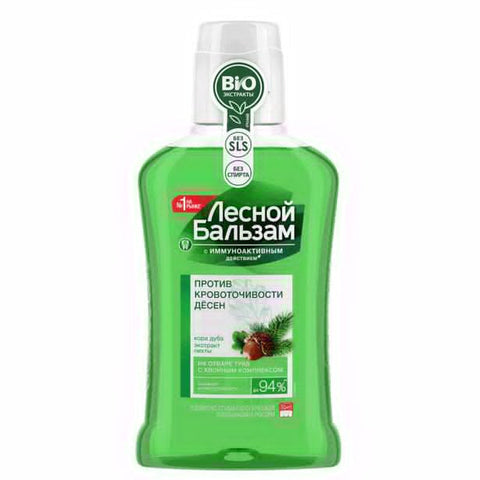
Mouthwash for bleeding gums with oak bark
Mouthwash for bleeding gums with oak bark
Mouthwash for bleeding gums with oak bark is a product for daily oral care for gums prone to bleeding, sensitivity, redness, and discomfort. The formula based on oak bark extract helps maintain gum health, reduce the sensation of irritation, and provide additional hygiene for hard-to-reach areas of the oral cavity.
Oak bark is traditionally used in products for caring for mucous membranes due to its tannin content. The mouthwash can be used as an auxiliary product in comprehensive gum care, including when bleeding occurs during brushing or eating hard food. Regular use of the product helps maintain a feeling of freshness, cleanliness, and comfort in the oral cavity.
Purpose of the product
The mouthwash is intended for additional care of the teeth and gums. It is suitable for adults and children, provided that the age restrictions and method of use comply with the information provided by the manufacturer on the packaging.
Reducing the severity of unpleasant sensations when gums are irritated.
Additional care for gums prone to bleeding.
Maintaining cleanliness in the oral cavity after brushing teeth.
Removing food debris from interdental spaces and other hard-to-reach areas.
Maintaining fresh breath throughout the day.
Additional protection of the oral mucous membrane against irritating factors.
Advantages of mouthwash with oak bark
Plant-based component
Oak bark extract is a traditional plant-based component of products for caring for gums. Tannins help reduce the sensation of looseness and discomfort of the mucous membrane, and also support the natural protective functions of the oral cavity tissues.
Comprehensive gum care
The mouthwash does not replace a toothbrush and toothpaste, but complements daily hygiene. Its use allows for the care of gums and mucous membranes after mechanical cleaning of the teeth.
Freshness and comfort
The product helps eliminate unpleasant odors caused by food debris and bacterial plaque, and leaves a feeling of cleanliness. The taste and aroma of the mouthwash depend on the composition of the specific manufacturer.
Composition
The composition of the mouthwash usually includes purified water, oak bark extract or infusion, as well as auxiliary components that ensure the stability, taste, and aroma of the product. The exact composition must be checked on the packaging of the specific product, as the concentration of active substances and the presence of additional components may vary.
Before use, people with allergies to plants, essential oils, preservatives, or other components are recommended to carefully read the instructions and the product composition.
Method of use and dosage
Before use, it is recommended to shake the bottle if required by the instructions. A small amount of mouthwash is measured using a measuring cap or the volume specified by the manufacturer is used.
Rinse the oral cavity for 30–60 seconds.
After rinsing, spit out the product.
Do not swallow the solution or wash it down with water unless otherwise stated in the instructions.
Do not eat or drink for 20–30 minutes after the procedure to preserve the caring effect.
Usually use 1–2 times a day after brushing teeth or as recommended by a dentist.
The dosage and frequency of use for children are determined by age and the instructions for the specific product. Younger children should use the mouthwash only under adult supervision to prevent accidental swallowing.
The duration of use depends on the condition of the gums and the purpose of use. If bleeding persists for more than 7–10 days, worsens, or is accompanied by pain, swelling, purulent discharge, or tooth mobility, it is necessary to consult a dentist.
Usage recommendations
To achieve the best results, it is recommended to combine the mouthwash with regular brushing of teeth with a soft toothbrush, the use of dental floss or interdental brushes, and professional oral hygiene. When bleeding occurs, do not completely stop brushing teeth, as the accumulation of plaque can worsen gum inflammation.
The product should not be used more often or in larger quantities than specified by the manufacturer. Increasing the dose does not speed up gum recovery and may lead to irritation of the mucous membrane in sensitive people.
Side effects
In most cases, the mouthwash is well tolerated when following the instructions for use. However, some people may experience adverse reactions.
Burning, tingling, or dryness of the oral mucous membrane.
Redness or increased gum irritation.
Changes in taste sensations.
Allergic reaction to the product components.
Unpleasant sensations in the stomach when accidentally swallowed.
If severe burning, swelling of the lips, tongue, or face, difficulty breathing, rash, or other signs of allergy appear, stop use and seek medical attention.
If persistent irritation of the mucous membrane occurs after use, rinse the mouth with clean water and consult a specialist. If a large amount of the product is accidentally swallowed, seek medical attention and provide the name and composition of the product.
Contraindications
Individual intolerance or increased sensitivity to the components of the composition.
Allergy to oak bark, other plant extracts, or auxiliary substances.
Age for which use is not permitted by the manufacturer's instructions.
Presence of mucous membrane damage accompanied by severe pain or bleeding without prior consultation with a doctor.
Inability to safely rinse the mouth and spit out the solution.
Pregnant and breastfeeding women, as well as patients with chronic oral diseases, are recommended to consult a dentist or doctor beforehand. The possibility of use depends on the composition of the specific mouthwash.
Important warnings
Gum bleeding is not always associated only with insufficient hygiene. It can be a sign of gingivitis, periodontitis, gum trauma, caries, an improperly installed orthopedic structure, or other diseases. The mouthwash helps care for the oral cavity, but does not eliminate the cause of the symptom without appropriate treatment.
Consult a dentist for persistent or heavy bleeding, swollen gums, unpleasant odor, appearance of pus, pain when chewing, exposed tooth necks, or tooth sensitivity.
The mouthwash is intended only for local use in the oral cavity. Do not use the solution to rinse the eyes, nose, or other parts of the body. Do not use the product after the expiration date.
Interaction with other oral care products
The mouthwash can be used together with toothpaste, a toothbrush, and interdental cleaning products. If antiseptics, fluorides, alcohol, or other active components are present in the composition, follow the manufacturer's recommendations for joint use.
When using therapeutic toothpaste as prescribed by a dentist, it is advisable to clarify whether the mouthwash should be used immediately after brushing teeth or if a certain interval should be observed. This helps preserve the action of the active components of the paste.
Conditions of use
Before first use, check the integrity of the bottle and the expiration date. The solution should have the color, smell, and consistency characteristic of the specific product. If the appearance changes, sediment appears, an unpleasant odor develops, or the packaging is damaged, it is not recommended to use the product.
Storage
Store the mouthwash in its original tightly closed packaging, in a dry place at room temperature, away from direct sunlight and heat sources. Do not freeze unless otherwise specified by the manufacturer.
Keep out of reach of children. The bottle should not be left open, as this may lead to contamination of the solution and deterioration of its consumer properties. After opening, the product must be used within the period specified by the manufacturer on the packaging or in the instructions.
Frequently asked questions
Can the mouthwash be used daily?
Most products are intended for regular use, however, the exact frequency depends on the composition. Follow the manufacturer's instructions and do not exceed the recommended dosage.
Can brushing teeth be completely replaced by mouthwash?
No. The mouthwash is an additional care product and does not replace a toothbrush, toothpaste, interdental cleaning, and a professional dental examination.
Why do the gums continue to bleed?
The persistence of the symptom may be associated with dental calculus, gum inflammation, periodontitis, caries, tissue trauma, or general diseases. In such a situation, a consultation with a dentist is necessary to determine the cause and choose treatment.
Can the mouthwash be swallowed?
No. The product is intended for rinsing and subsequent spitting out. If a small amount is accidentally swallowed, rinse the mouth with water. If a large volume is swallowed, seek medical attention.
Conclusions
Mouthwash for bleeding gums with oak bark is a convenient product for additional oral care. The plant-based component helps maintain gum cleanliness and comfort, reduce the sensation of irritation, and preserve fresh breath. To achieve results, it is important to use the product regularly, follow the dosage, and combine rinsing with full hygiene.
For prolonged, recurring, or heavy bleeding, consult a dentist. Self-use of mouthwash does not replace the diagnosis and treatment of tooth and gum diseases. Before use, carefully read the instructions, composition, age restrictions, and storage conditions of the specific product.