
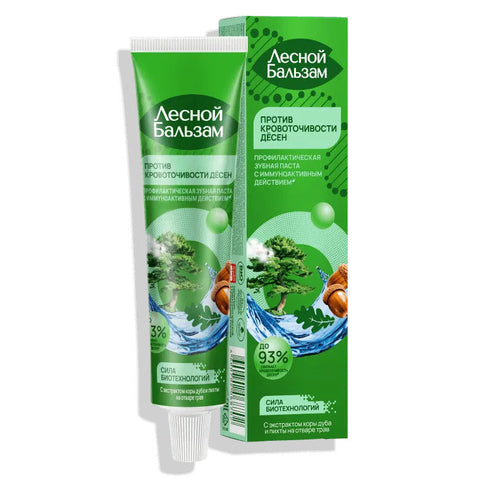
Toothpaste for bleeding gums with oak bark
Toothpaste for bleeding gums with oak bark
Toothpaste for bleeding gums with oak bark is designed for comprehensive oral care when gums are prone to inflammation, irritation, and bleeding during brushing. The product's formula contains oak bark extract or components known for their astringent and supportive properties. The toothpaste helps gently remove soft bacterial plaque, maintain gum health, and provide a fresh feeling after brushing.
Bleeding gums may be caused by inadequate oral hygiene, the accumulation of dental plaque and tartar, trauma to the mucous membrane, an incorrectly chosen toothbrush, inflammatory gum diseases, or other reasons. Toothpaste with oak bark can be used as part of daily care, but it does not replace professional diagnosis and treatment by a dentist.
Benefits of toothpaste with oak bark
- Suitable for oral care when gums are prone to bleeding.
- Helps remove soft dental plaque and food debris.
- Helps maintain clean teeth and fresh breath.
- Oak bark components have an astringent and conditioning effect on gum tissues.
- May reduce the sensation of discomfort associated with gum irritation.
- Suitable for regular hygiene in the absence of individual contraindications.
- Helps maintain comprehensive care at the first signs of gum sensitivity and irritation.
Composition and properties
The main plant component of the product is oak bark or its extract. The composition may also include cleansing, moisturizing, foaming, flavoring, and mineral components typical of toothpastes. The exact composition should be checked on the packaging of the specific manufacturer.
Oak bark is traditionally used in products for caring for mucous membranes due to its tannin content. These components have astringent properties and may help reduce the sensation of irritation. The effectiveness and tolerability of the toothpaste depend on the product's composition, the condition of the oral cavity, and adherence to hygiene rules.
Indications for use
- Daily hygiene of teeth and gums.
- Tendency of gums to bleed during brushing.
- Redness and increased gum sensitivity.
- Presence of soft dental plaque.
- Bad breath associated with inadequate hygiene.
- Preventive oral care after consultation with a dentist.
If bleeding persists for more than one or two weeks, worsens, or is accompanied by pain, swelling, bad breath, loose teeth, or pus discharge, you should consult a dentist. Such symptoms may indicate gingivitis, periodontitis, or other conditions requiring special treatment.
Directions for use and dosage
Apply a small amount of toothpaste, approximately the size of a pea, to a soft or medium-firm toothbrush. Brush your teeth with gentle sweeping motions for two to three minutes morning and evening. Pay special attention to the gum line without applying excessive pressure.
After brushing, it is recommended to thoroughly rinse your mouth with water. Do not swallow the toothpaste. For additional care, you can use dental floss, an oral irrigator, or mouthwash if their use is recommended by a dentist.
In cases of severe bleeding, do not stop oral hygiene or brush your teeth too gently. Plaque buildup can worsen inflammation. At the same time, excessive pressure with the brush can traumatize the gums, so it is important to use a gentle brushing technique.
Side effects
In cases of individual sensitivity to the product's components, local reactions may occur:
- burning or tingling in the oral cavity;
- increased irritation of the mucous membrane;
- redness or swelling of the gums;
- a dry mouth sensation;
- changes in taste sensations;
- allergic reaction to plant, aromatic, or other components of the formula.
If severe discomfort, swelling of the face or lips, difficulty breathing, a widespread rash, or other signs of an allergy occur, discontinue use of the toothpaste and seek medical attention. If a large amount of the product is accidentally swallowed, it is also recommended to consult a doctor.
Contraindications
- Individual intolerance to oak bark or any other component of the toothpaste.
- Allergy to plant extracts, essential oils, flavorings, or auxiliary substances included in the formula.
- Damage to the mucous membrane, ulcers, or severe irritation, where the use of the toothpaste causes discomfort.
- Childhood, if it does not correspond to the manufacturer's recommendations.
Children should use toothpaste only under adult supervision to prevent swallowing it. For children, choose a product that is age-appropriate and contains an acceptable concentration of fluorides, if they are included in the formula.
Special instructions
Toothpaste with oak bark is intended for local care and is not a standalone medication for treating periodontal diseases. In the presence of dental tartar, deep periodontal pockets, persistent bleeding, or bad breath, professional hygiene and examination by a specialist are required.
It is not recommended to use several toothpastes with pronounced therapeutic, whitening, or antiseptic effects at once without consulting a dentist. In cases of tooth sensitivity, avoid overly intensive brushing and products with aggressive abrasives.
Oral care recommendations
- Brush your teeth twice a day for at least two minutes.
- Use a soft-bristled brush and replace it in a timely manner.
- Clean interdental spaces using floss, interdental brushes, or an oral irrigator.
- Limit frequent consumption of sweet and sticky foods.
- After eating, rinse your mouth with water whenever possible.
- Visit a dentist at least once or twice a year, or according to an individual schedule.
- Undergo professional hygiene as recommended by a specialist.
Storage
Store the toothpaste in tightly closed packaging, in a dry place at room temperature, away from direct sunlight and heat sources. Do not allow the product to freeze or overheat. Store out of reach of children.
After use, the tube must be closed with the cap. Do not use the toothpaste after the expiration date indicated on the packaging, or if there is a change in color, smell, consistency, or the integrity of the packaging.
Release form
Toothpaste is sold in tubes of various volumes. The appearance of the packaging, exact composition, concentration of active components, and expiration date depend on the manufacturer. Before use, read the information on the packaging and the instructions.
Frequently asked questions
Can I use the toothpaste every day?
Yes, in the absence of contraindications, the toothpaste can be used for daily hygiene morning and evening. If irritation or other adverse reactions occur, discontinue use.
Does the toothpaste completely stop bleeding gums?
The toothpaste can support hygiene and reduce the impact of soft dental plaque, but bleeding is not always caused solely by the choice of toothpaste. If the symptom persists, you must determine the cause with a dentist.
Can the toothpaste be used for inflamed gums?
The product can be used as part of daily care for mild gum irritation. In cases of severe inflammation, pain, swelling, or pus discharge, consultation with a specialist and prescribed treatment are necessary.
Is the toothpaste suitable for sensitive teeth?
Whether it can be used depends on the product's full composition and individual reaction. In cases of increased sensitivity, it is recommended to choose a toothpaste with appropriate labeling and obtain a dentist's recommendation beforehand.
Conclusions
Toothpaste for bleeding gums with oak bark is a product for the daily care of teeth and gums. It helps maintain oral cleanliness, remove soft plaque, freshen breath, and provide gentle gum care thanks to its plant components.
To achieve optimal results, it is important to brush your teeth regularly, use additional interdental hygiene products, and follow proper brushing technique without excessive pressure. Persistent or worsening bleeding requires mandatory consultation with a dentist, as it may be a sign of a condition that cannot be treated with toothpaste alone.